


If your referral status lives in someone’s inbox, you don’t have visibility, you have hope.
Most referral breakdowns aren’t clinical problems. They’re operational: missing documents, unclear ownership, no timestamps, no next step, and no easy way for care coordination teams to see what’s happening without calling five different people.
Digital referral management fixes that by turning referrals into a trackable workflow where every step is logged, owned, and visible in real time.
In this guide, we’ll explore how digital referral management systems (RMS) can eliminate inefficiencies, reduce administrative burden, and provide complete transparency to healthcare teams. We’ll dive deep into how this technology works, its benefits, and why it’s essential for healthcare organizations looking to improve care coordination and operational efficiency.
Why Traditional Referral Systems Fail
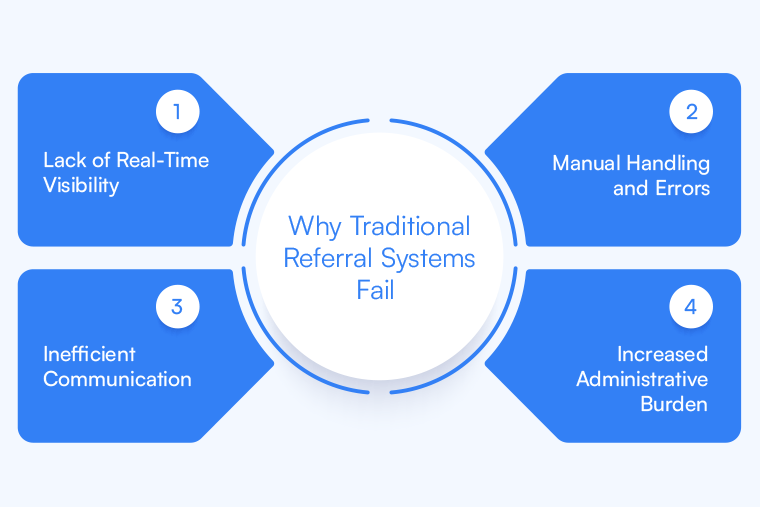
Traditional referral processes are manual, often relying on paper slips, faxes, and phone calls to transfer patient information between providers. This outdated system is not only inefficient but also prone to errors. Here’s why:
1. Lack of Real-Time Visibility
In paper-based systems, referrals are often sent via fax or email with no real-time tracking. The referring provider, specialists, and other team members often have no idea where the referral is in the process.
2. Manual Handling and Errors
Manual entry of data increases the chance for mistakes. Handwritten documents can be misinterpreted, and paper records are easily misplaced or lost. Even faxing can be unreliable, leading to incomplete or missing referrals.
3. Inefficient Communication
Healthcare teams often rely on multiple methods of communication phone calls, emails, or faxes to confirm receipt and status updates of referrals. This fragmented communication leads to delays, frustration, and more opportunities for mistakes.
4. Increased Administrative Burden
Paper-based workflows require substantial manual effort for tracking and following up on referrals. This can lead to burnout among administrative staff, as they spend valuable time searching for documents, confirming details, and chasing down updates.
How Digital Referral Management Transforms Healthcare Workflows
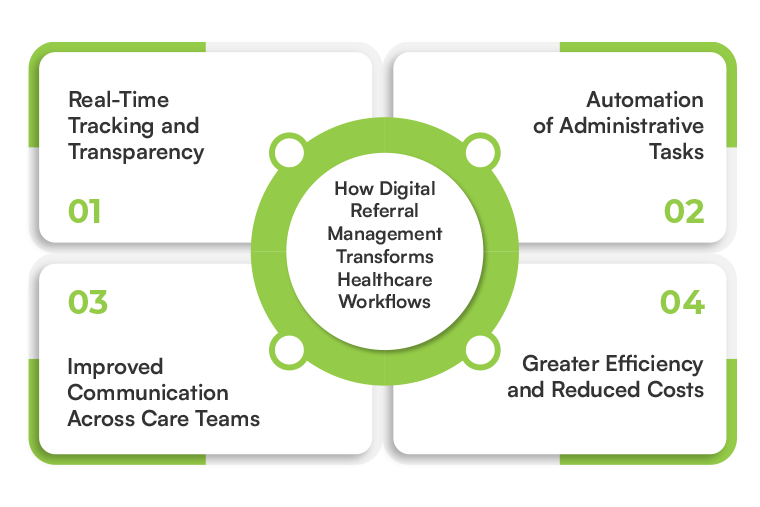
1. Real-Time Tracking and Transparency
Digital referral management systems provide full visibility of each referral from creation to completion. By logging each action in real time, healthcare providers and specialists can instantly see where the referral stands. There’s no more waiting on confirmation or chasing down documents.
- Instant Status Updates: Whether it’s in triage, scheduled, or completed, the status of each referral is updated in real-time and visible to all relevant stakeholders.
- End-to-End Tracking: From the moment a referral is created until the patient is treated, the entire journey is traceable. No more uncertainty about whether a referral was received, reviewed, or acted upon.
2. Automation of Administrative Tasks
Automation is the heart of digital referral management. By removing manual processes, digital systems streamline the workflow, allowing healthcare staff to focus on higher-value tasks like patient care. Here's how:
- Automated Document Collection: Missing documents often delay referrals. Digital systems can automatically check that all necessary paperwork is attached, reducing back-and-forth communication.
- Automated Notifications: The system sends automated notifications to all stakeholders when actions are taken (e.g., when a referral is accepted, scheduled, or requires follow-up). This eliminates the need for manual updates and reduces human error.
3. Improved Communication Across Care Teams
Digital referral management systems centralize all communication in one platform, making it easier for healthcare providers to share information. Whether it’s the referring provider, specialist, or patient, everyone involved in the referral process is on the same page.
- Instant Sharing of Data: No more faxes or phone calls. Patient information is securely shared with the receiving provider via a digital platform.
- Collaborative Workflows: Providers can leave notes, ask questions, and communicate directly within the system, ensuring that everyone has the most up-to-date information.
4. Greater Efficiency and Reduced Costs
With automated workflows and real-time updates, digital referral systems drastically reduce the administrative burden on healthcare staff. This leads to significant time savings and operational efficiency.
- Reduced Administrative Overhead: Less time spent tracking down paperwork and chasing status updates means lower administrative costs.
- Faster Referrals: With automated processes, referrals move through the system faster, allowing patients to receive timely care.
The Workflow of a Digital Referral Management System
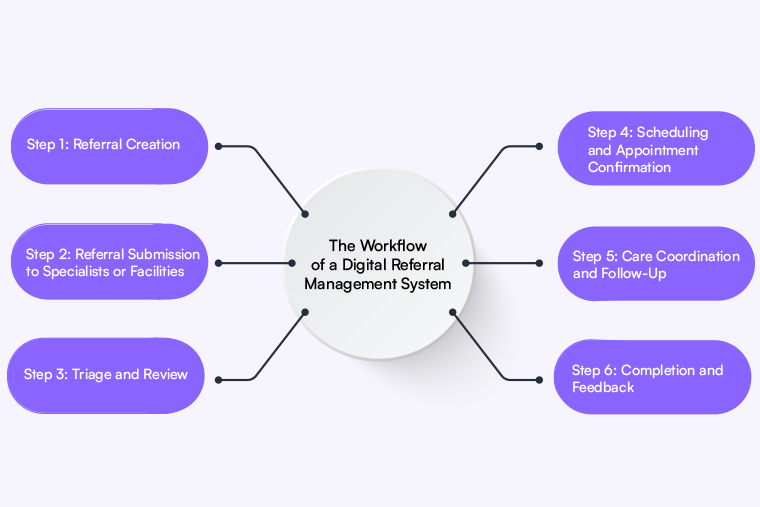
A digital referral management system transforms the entire process of referring patients from one provider to another, streamlining communication, automating tasks, and reducing inefficiencies. The workflow is designed to ensure complete transparency and accountability at every stage, enhancing the speed and accuracy of patient referrals.
Below, we’ll explore each step in the workflow, highlighting how automation, integration, and real-time tracking create a more efficient, reliable, and patient-centered referral process.
Step 1: Referral Creation
The referral process begins when a patient consults their primary healthcare provider (PCP). If the PCP determines that the patient needs specialized care, further testing, or a consultation with another provider, a referral is created in the Electronic Health Record (EHR) system.
How It Works:
- Data Entry: The referring healthcare provider enters the patient’s details into the EHR system, including medical history, symptoms, diagnosis, and the reason for the referral. This ensures the referral is comprehensive and accurate.
- Automatic Population: Using integrated systems, the EHR pulls relevant patient data automatically (such as lab results, previous diagnoses, imaging, etc.), reducing the need for manual input and minimizing human error.
- Digital Record Creation: As soon as the referral is created, it is timestamped and saved in the system, linking the patient’s referral to their existing digital medical records. This creates a single, accessible source of truth for all involved providers.
Benefits:
- Improved Accuracy: Automatic data population and real-time entry ensure fewer errors in patient details.
- Visibility: The referral is immediately available to both the referring provider and other healthcare teams, offering full visibility from the start.
- Time-Saving: Eliminates the need for handwritten forms or manual faxing, speeding up the referral process.
Step 2: Referral Submission to Specialists or Facilities
Once the referral is created, it needs to be submitted to the relevant specialist or healthcare facility (e.g., diagnostic center, hospital, or physical therapist). In the traditional process, this might involve faxing or mailing physical documents, which can be delayed or lost. In a digital system, referrals are sent directly through the digital platform.
How It Works:
- Direct Submission: The referral is transmitted securely through the EHR system to the receiving healthcare provider or specialist. This eliminates the need for paper-based transmission methods like faxes or postal mail.
- Secure Data Exchange: All data, including medical records and diagnostic details, is sent securely and instantly, reducing the risk of sensitive information being compromised.
- Automatic Notification: Once the referral is submitted, both the referring provider and the receiving specialist receive an automatic notification, confirming that the referral has been sent.
Benefits:
- Speed: Referrals are delivered instantly, reducing the wait time compared to manual transmission.
- Security: Using secure digital channels ensures that sensitive patient information is protected throughout the referral process.
- Reduced Risk of Errors: Paper-based referrals are prone to errors and delays; digital referrals eliminate these risks by ensuring accurate, real-time data sharing.
Step 3: Triage and Review
Once the referral reaches the specialist or facility, the next step is triage - the process of reviewing the referral to determine its urgency and relevance. Triage is a critical step that ensures high-priority cases are handled first, reducing patient wait times and improving overall care coordination.
How It Works:
- Digital Triage: In traditional systems, triage might involve phone calls or emails to clarify the details of the referral. In digital systems, specialists can access the patient’s entire medical history, referral details, and any necessary documents in one place.
- AI-Powered Urgency Detection: Many digital referral systems integrate Artificial Intelligence (AI) to help prioritize referrals based on urgency. For example, AI can automatically flag referrals with urgent conditions (e.g., oncology or cardiac issues) to ensure they are addressed first.
- Review by Specialists: Specialists can assess the case based on the data provided, including medical history, test results, and reason for referral. The digital system may also provide recommendations for further action, such as additional tests or treatment suggestions.
Benefits:
- Speed: By having all relevant information available digitally, specialists can quickly assess the referral and take necessary action without unnecessary delays.
- AI-Driven Prioritization: AI helps automate and optimize the prioritization of referrals, ensuring that critical cases are handled immediately.
- Transparency: Both the referring provider and specialist can access and review the referral at the same time, ensuring alignment and reducing miscommunication.
Step 4: Scheduling and Appointment Confirmation
Once the referral is reviewed and accepted, the next step is scheduling the patient’s appointment. In traditional systems, this often involves multiple phone calls or emails to find a suitable time. With digital referral management, this process is automated and streamlined.
How It Works:
- Automated Scheduling: After accepting the referral, the system automatically schedules an appointment for the patient, checking the availability of both the specialist and the patient.
- Instant Notifications: The patient receives an automated confirmation of their appointment via email, text, or a patient portal, ensuring they are aware of the date, time, and location.
- Reminder Alerts: The system sends automated reminders to both the patient and provider as the appointment date approaches, reducing the risk of no-shows or missed appointments.
Benefits:
- Efficiency: Eliminates the need for phone calls or back-and-forth communication to schedule an appointment.
- Convenience for Patients: Automated notifications ensure patients have all the information they need to attend their appointment.
- Improved Patient Experience: Reminder alerts help reduce missed appointments, ensuring patients receive timely care.
Step 5: Care Coordination and Follow-Up
After the appointment, care coordination continues with follow-up care. It’s important to track the patient’s next steps, whether that’s additional treatments, lab work, or future consultations. Digital referral systems provide an automated and seamless way to track and manage follow-up actions.
How It Works:
- Automated Follow-Ups: The system sends automatic reminders to patients for any upcoming appointments, tests, or treatments based on the referral details.
- Post-Appointment Communication: Patients are prompted to schedule any follow-up appointments or additional diagnostic tests that may be necessary after their initial consultation.
- Tracking the Entire Care Journey: Care teams can monitor the entire patient journey, ensuring that no step is missed and that all aspects of follow-up care are documented and acted upon.
Benefits:
- Streamlined Care: Ensures that follow-up care is automatically scheduled and tracked without requiring manual intervention.
- Patient Engagement: Automated reminders and communication keep patients engaged in their care journey, reducing missed appointments and delays in treatment.
- Comprehensive Care: By tracking all follow-up actions digitally, care teams can ensure that every part of the patient’s care plan is executed seamlessly.
Step 6: Completion and Feedback
The final step in the referral process is the completion of the referral. Once the patient has completed the necessary consultations or treatments, the system closes the referral loop. Digital systems also facilitate feedback collection to improve future referral processes.
How It Works:
- Referral Closure: The referral is marked as complete once all appointments, treatments, and follow-up care have been documented.
- Automated Feedback Requests: After the referral process is complete, patients are automatically sent a satisfaction survey to assess their experience and provide feedback.
- Data Analysis: The system collects feedback and generates reports that help healthcare providers evaluate the effectiveness of their referral processes, identify bottlenecks, and optimize workflows.
Benefits:
- Continuous Improvement: Patient feedback and referral data are continuously collected, providing insights to improve care and operational efficiency.
- Increased Accountability: Closing the referral loop ensures that all tasks are completed, reducing the risk of missed steps and improving patient satisfaction.
- Optimized Workflows: Healthcare providers can analyze feedback to identify areas for improvement in the referral management process, enhancing future patient care.
A digital referral management system transforms a traditionally fragmented, paper-based process into a seamless, efficient, and transparent workflow. Each step in the process from referral creation to completion is digitized and automated, ensuring faster, more accurate, and more accountable referrals. With real-time visibility, automated scheduling, and integrated care coordination, digital systems streamline the entire referral process, improving both operational efficiency and patient outcomes.
As healthcare organizations continue to embrace digital transformation, referral management is one of the most impactful areas for driving meaningful improvements. By adopting digital referral systems, healthcare providers can ensure that their patients receive timely, coordinated care, and that no referral falls through the cracks.
The Role of Artificial Intelligence (AI) in Digital Referral Management
-in-Digital-Referral-Management.png)
Artificial Intelligence (AI) is revolutionizing how healthcare organizations manage referrals, taking the process far beyond simple automation. With the immense volume of referrals processed daily, AI is stepping in to bring a level of sophistication and intelligence that optimizes both the accuracy and speed of each step in the referral process.
Here’s how AI is playing a pivotal role in transforming digital referral management:
1. AI for Prioritization of Referrals
One of the most time-sensitive aspects of referral management is prioritization. In healthcare, especially in specialties with long waitlists, it's critical that urgent cases are given priority. AI helps optimize this by analyzing referral data to automatically flag high-priority cases based on pre-defined criteria.
- AI-Driven Urgency Detection: AI can analyze patient data, medical history, and symptoms to determine which referrals need immediate attention. For example, a referral for a heart attack patient can be flagged as urgent, ensuring it gets attention first, while non-urgent referrals (e.g., routine check-ups) are categorized as lower priority.
- Risk Prediction: AI can also assess a patient's risk factors by cross-referencing their medical history with large datasets, enabling the system to predict the urgency of their case more accurately. AI algorithms learn over time, becoming better at distinguishing between cases that require immediate intervention and those that can be scheduled later.
- Faster Triage: By automating the triage process, AI reduces manual sorting, cutting down the time needed to assess referrals. This enables specialists to quickly address the most urgent cases, improving overall healthcare outcomes.
2. AI-Powered Recommendations for Specialist Matching
Finding the right specialist for a particular patient’s needs can be a complex task. In traditional systems, providers often have to manually search for available specialists who meet specific criteria. With AI, this process is automated and streamlined:
- Smart Specialist Matching: AI can instantly analyze the details of the referral and match the patient with the most appropriate specialist based on the patient's medical history, referral reason, and the specialist’s expertise. AI uses algorithms to find specialists who have a history of handling cases similar to the patient’s, ensuring that the patient receives the best possible care.
- Real-Time Availability: AI can also check the availability of specialists and recommend those with open time slots. This helps to speed up the referral process, ensuring that patients are seen sooner and reducing delays caused by overbooked practitioners.
- Personalized Care Pathways: By considering the patient’s past interactions, medical history, and even preferences, AI can help design a personalized care pathway. This ensures that the referral process is not only efficient but also tailored to the specific needs of the patient, leading to better outcomes and a more comfortable care experience.
3. AI in Referral Data Validation and Quality Control
One of the most common issues with traditional referral systems is data errors: missing information, incorrect patient details, or incomplete referral forms. AI plays a key role in data validation, ensuring that only complete and accurate referrals make it through the system.
- Automated Data Entry and Validation: AI systems can automatically pull in relevant data from Electronic Health Records (EHRs), eliminating the need for manual data entry. By cross-checking and validating the information against existing patient records, AI helps prevent errors that could delay treatment.
- Error Detection: AI can identify inconsistencies in referral information, such as missing medical history or unclear referral reasons, and flag them for correction before they are submitted. This helps ensure that the right information reaches the right specialist the first time, reducing the chances of delays caused by errors.
- Standardization of Formats: AI can also standardize the format of incoming referrals, ensuring that all necessary fields are filled in correctly and consistently. Standardized data formats are essential for efficient processing and ensure that data can be easily shared across different healthcare systems.
4. AI for Predictive Analytics and Workflow Optimization
AI doesn't just improve individual steps in the referral process; it also has the power to optimize the entire workflow. By analyzing large datasets and historical referral data, AI can identify patterns and predict future bottlenecks, improving the overall efficiency of the referral system.
- Predicting Referral Bottlenecks: AI can track and analyze referral trends over time, identifying any bottlenecks or delays in the referral process. For example, if certain departments have consistently longer processing times for specific types of referrals, AI can recommend ways to streamline these workflows, such as redistributing referrals to less busy departments.
- AI for Scheduling Optimization: By analyzing scheduling patterns, AI can help predict when certain specialists will be available and suggest the best times for patient appointments. AI can even anticipate potential scheduling conflicts and automatically propose alternative appointment times, improving operational efficiency and reducing patient wait times.
- Forecasting Healthcare Demand: AI can predict future demand for specialist care based on referral trends, patient demographics, and health conditions. This helps healthcare organizations plan staffing and resource allocation more effectively, ensuring that they can handle peak referral periods without compromising patient care.
5. AI-Driven Follow-Up and Patient Engagement
AI doesn’t stop at the referral process; it continues to support the patient through the entire care journey. After a referral is made, AI can automate follow-up tasks to ensure that the patient receives the care they need:
- Automated Appointment Reminders: AI systems can send personalized reminders to patients about upcoming appointments, reducing no-show rates and ensuring timely care. This is particularly useful in referral management, where missing an appointment can delay the entire care process.
- Post-Referral Communication: AI-powered chatbots and virtual assistants can engage with patients post-referral, answering their questions, providing updates on their referral status, and offering guidance on next steps. This improves patient engagement and satisfaction by keeping patients informed and involved in their care.
- Survey and Feedback Collection: After the referral process is completed, AI can automatically send surveys to patients to collect feedback on their experience. This data can then be analyzed to identify areas for improvement, helping healthcare providers optimize their referral workflows further.
6. Natural Language Processing (NLP) in Referral Data
Natural Language Processing (NLP) is a subset of AI that allows machines to understand and process human language. NLP is particularly valuable in referral management because it helps extract useful information from unstructured text, such as handwritten notes or free-text referral forms.
- Extracting Key Information: AI with NLP can scan medical records, referral notes, and emails to extract critical details like patient symptoms, diagnosis, and history, which might otherwise be buried in long paragraphs of text. This makes it easier for healthcare providers to understand the referral and ensure nothing is overlooked.
- Improving Data Accessibility: NLP helps make unstructured data more accessible and usable, reducing the reliance on paper forms and handwritten notes. This leads to faster, more accurate referrals and improves overall efficiency in the healthcare workflow.
The integration of AI into digital referral management systems is revolutionizing how healthcare organizations manage patient referrals. From automated prioritization and intelligent specialist matching to predictive analytics and automated follow-ups, AI optimizes every step of the process, making it faster, more accurate, and less prone to human error.
By leveraging AI, healthcare providers can enhance operational efficiency, improve patient outcomes, and deliver a more streamlined, transparent referral process. As AI technology continues to evolve, its role in referral management will only become more central to the healthcare industry’s digital transformation.
Conclusion: Why Digital Referral Management is Essential for Healthcare Efficiency
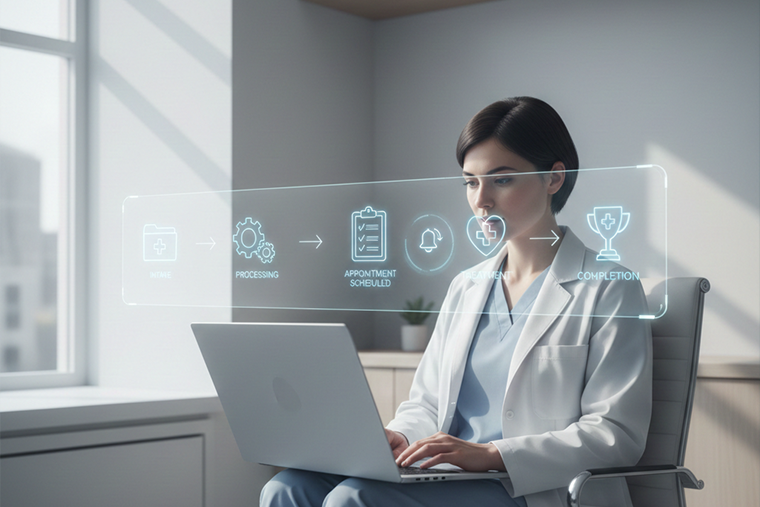
Digital referral management systems are no longer just a convenience-they are essential tools that improve patient care, reduce administrative burden, and streamline healthcare workflows. By providing real-time visibility, automating manual tasks, and improving communication between providers, digital systems ensure that no referral falls through the cracks.
The shift from paper-based to digital referral management is a crucial step toward enhancing healthcare operational efficiency, improving patient outcomes, and providing a better overall experience for patients and providers alike.
Interested in optimizing your referral management process? Contact us today to learn how digital referral management can streamline your healthcare workflows and improve patient care.