


Introduction
Post-surgery recovery is a critical phase in patient care, and the way patients are instructed during discharge plays a pivotal role in their healing. Studies have shown that over 20% of patients are readmitted within 30 days after surgery due to misunderstandings or lack of clarity regarding discharge instructions. The complexity of managing post-surgery care, combined with cognitive overload, pain, and sometimes literacy barriers, can hinder patients’ ability to retain important recovery instructions.
It’s estimated that patients forget 40-80% of what they are told upon discharge, a significant factor contributing to readmissions. This lack of clarity, coupled with non-adherence to medication, is a major challenge. For healthcare leaders, this issue represents a real opportunity for improvement, as readmissions cost hospitals over $15,000 per case.
This is where Voice AI technology emerges as a solution. Voice AI is transforming post-surgery care by providing patients with interactive, on-demand guidance via their phones or smart devices, ensuring they receive clear and consistent instructions. These voice-powered assistants can deliver important information in real-time, reinforce key recovery instructions, and even detect when intervention is necessary—all with the convenience of an AI-driven conversational model.
In this post, we’ll explore the key challenges in post-surgery care and how Voice AI can bridge the gap, ensuring patients have the tools they need to recover effectively.
Core Challenges in Post-Surgery Care

Comprehension Barriers: Cognitive Overload and Language Barriers
When patients are discharged after surgery, they are often inundated with a range of instructions covering everything from wound care to dietary restrictions. Unfortunately, cognitive overload from pain, stress, and medications makes it difficult for patients to process and retain all of the information they need for a successful recovery. This leads to confusion, missed steps in care, and ultimately, a higher likelihood of complications or readmissions.
Some of the key barriers to comprehension in post-surgery care include:
- Cognitive Overload: Due to the physical and emotional stress of surgery, patients may struggle to process detailed instructions, especially when there are multiple, complex aspects of care to remember.
- Language Barriers: For patients who speak a different language or have low literacy, written discharge instructions can be incomprehensible. This significantly reduces their ability to follow through with recovery guidelines.
- Medication Side Effects: Post-surgery medications can cause fatigue, confusion, or even short-term memory loss, further exacerbating the inability to recall instructions.
Healthcare leaders face the challenge of reducing nurse overload, as follow-up calls become necessary to ensure patients understand and follow instructions. Unfortunately, this can burden staff and also lead to delays in patient care, leaving patients without the immediate support they need.
Non-Adherence Risks
One of the most significant risks in post-surgery recovery is non-adherence to prescribed medications and follow-up care. Failure to take medications properly or follow recovery protocols can result in complications, prolonged recovery times, or even readmissions. According to a study by the Centers for Medicare & Medicaid Services (CMS), medication non-adherence contributes to nearly $290 billion in avoidable healthcare costs annually.
How Voice AI Delivers Instructions
Voice AI technology offers a dynamic and scalable solution to these challenges by providing patients with clear, repeatable, and easy-to-follow instructions. It empowers patients to take charge of their recovery through a conversational interface, available whenever they need it. This helps overcome the key barriers to adherence, ensuring that patients can consistently engage with their care.
Key Features of Voice AI in Post-Surgery Care:
- Replayable Audio: Patients can replay key instructions about wound care, mobility restrictions, and dietary advice as often as needed.
- Multilingual Support: Voice AI can communicate in multiple languages, ensuring that patients from diverse backgrounds can access information in their preferred language.
- Personalized Guidance: By integrating with Electronic Health Records (EHRs), Voice AI delivers instructions tailored to the patient’s specific surgery and recovery plan.
Case Study: Wound Care Instructions
Consider a patient who has undergone hip replacement surgery. The patient is instructed on wound care, mobility restrictions, and signs of infection. With Voice AI, this patient can hear clear, step-by-step instructions on how to care for the surgical site, ask questions about specific concerns, and receive reminders to follow certain post-operative guidelines.
Medication Management Features
Ensuring that patients take medications correctly after surgery is critical to preventing complications. Voice AI not only reminds patients when it’s time to take their medications but also provides detailed guidance on how to properly manage their regimen.
Key Features of Medication Management via Voice AI:
- Timed Reminders: Voice AI sends patients timely notifications for medication schedules, reducing the likelihood of missed doses.
- Voice-Confirmed Intake: Patients can confirm when they’ve taken their medication, providing a form of self-checking that helps avoid missed doses.
- Side Effect Explanations: Voice AI can inform patients about possible side effects, helping them recognize if they are experiencing adverse reactions and need to contact their healthcare provider.
- Polypharmacy Checks: For patients taking multiple medications, Voice AI can check for potential drug interactions and remind patients of any contraindications.
Real-Life Example: Polypharmacy in Post-Surgery Patients
For patients recovering from heart surgery, managing multiple medications is common. Voice AI can assist by reminding them when to take each medication, provide information on interactions, and allow for easy logging of intake via voice commands. This system minimizes the risk of medication errors and supports effective recovery.
Symptom Monitoring and Triage
After surgery, it's crucial to monitor patients for complications such as infection, excessive swelling, or signs of blood clots. Voice AI offers 24/7 check-ins and can monitor a range of post-surgery symptoms to detect red flags early.
Key Features of Symptom Monitoring:
- Daily Check-ins: Patients can answer simple questions about how they feel, and Voice AI tracks this data in real time. If the patient reports concerning symptoms like fever or unexplained pain, the system can alert healthcare providers.
- Emotion-Aware Escalations: If a patient sounds anxious or upset, Voice AI can escalate the conversation to a human healthcare provider.
- Automatic EHR Notes: All patient responses are logged directly into their EHR, ensuring seamless communication between the AI system and clinical staff.
Example: Detecting Early Signs of Infection
If a patient mentions redness, increased swelling, or reports that their pain levels are higher than expected, Voice AI can recognize these as potential signs of infection and recommend immediate medical attention, thereby preventing complications.
Integration with Clinical Workflows

For Voice AI to be truly effective, it must integrate seamlessly into existing healthcare workflows. Cabot’s AI Voice Agent Solution is designed to sync with EHR systems and follow FHIR standards (Fast Healthcare Interoperability Resources), allowing for smooth data exchange between the AI platform and healthcare providers.
Benefits for Healthcare Leaders:
- Nurse Call Reduction: By answering routine questions, Voice AI reduces the need for follow-up calls to healthcare staff, allowing nurses to focus on higher-priority tasks.
- EHR Integration: Data captured by Voice AI can be automatically fed into the patient’s EHR, ensuring that healthcare providers have up-to-date information about the patient’s recovery.
- Quality Metrics: Data analytics from Voice AI can be used to measure patient adherence, symptom progression, and readmission risks—empowering healthcare leaders to improve quality of care.
Accessibility for Diverse Populations
One of the critical barriers to effective post-surgery care is ensuring that all patients, regardless of literacy level or age, have access to the information they need. Voice AI is particularly effective in serving low-literacy populations, the elderly, and non-native speakers.
How Voice AI Improves Access:
- Non-Written Instructions: For patients with low literacy or vision impairments, Voice AI provides spoken instructions that are easier to understand.
- Multilingual Capabilities: With multilingual support, patients who speak languages other than English can receive post-surgery care instructions in their preferred language, ensuring equity in healthcare delivery.
Evidence and ROI Metrics
The evidence speaks for itself—adopting Voice AI can significantly reduce readmission rates, cut costs, and improve patient satisfaction. Studies show that Voice AI in healthcare leads to:
- 30-60% decrease in readmissions within 30 days of surgery
- $2,000 per patient in cost savings, driven by fewer hospital visits and more effective home recovery
- Increased HCAHPS scores, which directly correlate with improved patient satisfaction
Table: Traditional vs. Voice AI Methods for Post-Surgery Care
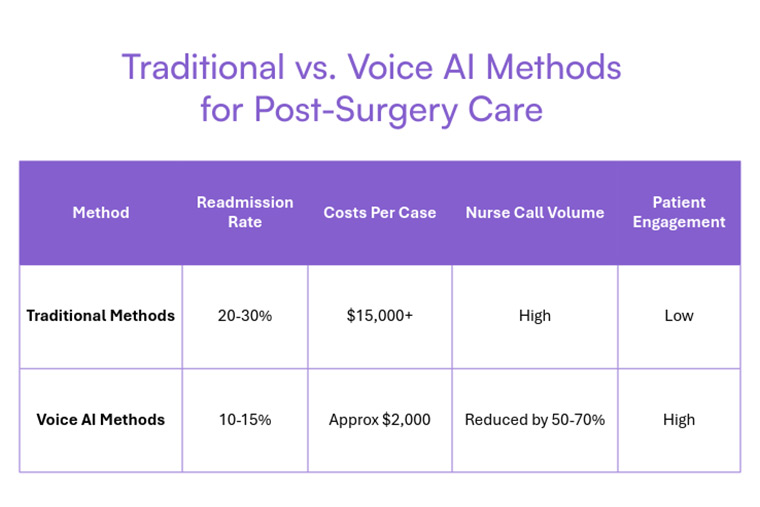
The savings from Voice AI are not only evident in cost reduction but also in improved clinical outcomes and enhanced operational efficiency.
Spotlight on Cabot’s AI Agent Solution
Cabot's AI Voice Agent Solution is designed to improve post-surgery care by offering an interactive, scalable, and personalized solution that integrates seamlessly with existing healthcare workflows. Here’s a more detailed overview of the solution's benefits:
- Full Duplex Voice Agent: Cabot’s solution features full-duplex voice communication, enabling two-way conversations where patients can interact with the system in real time. This enhances the engagement and usability of the system, as patients can ask questions, receive clarifications, and engage in a dialogue with the AI as needed.
- Calm, Compassionate Tone: The AI voice agent is designed with a calm and soothing tone, tailored to help reduce patient anxiety, especially in post-surgery recovery situations. The tone helps create a comforting atmosphere, promoting a sense of safety and reassurance during the recovery process.
- Medically Aware & Contextual Knowledge: The AI is equipped with a rich knowledge base of medically relevant information. It ensures that the guidance provided is accurate, adhering to the latest clinical best practices and recovery protocols. This prevents patients from receiving outdated or generic instructions and ensures that they receive the most relevant care for their specific surgery.
- Quick Response Time: The voice agent is designed to provide immediate answers to patient queries, minimizing wait times and helping patients access critical information quickly. Whether patients are asking about medication instructions or recovery milestones, the AI offers prompt, clear responses, improving their overall experience and compliance.
- 24/7 Availability: Patients can rely on the voice agent at any time of day or night. This 24/7 availability ensures that they always have access to critical information and guidance, helping reduce the need for follow-up calls or in-person visits for routine inquiries.
- Real-Time Symptom Monitoring & Triage: The AI system monitors patient-reported symptoms in real-time. If a patient reports concerning symptoms, the system can instantly escalate the issue to a healthcare provider for immediate intervention. This proactive approach minimizes the risk of complications and improves patient outcomes.
Implementation Strategies

Implementing Voice AI in post-surgery care requires a thoughtful approach to ensure seamless integration and effectiveness. Here are some key strategies for implementing Cabot's AI Voice Agent Solution:
- Pilot Programs: Start with a pilot program targeting high-risk surgeries or patients with historically high readmission rates. This allows healthcare organizations to evaluate the effectiveness of the Voice AI system in real-world conditions, gather valuable feedback, and adjust the system before broader deployment.
- Staff Training & Support: Healthcare staff should be trained on how to interact with the AI system and monitor patient engagement. This includes understanding the AI’s capabilities, addressing false positives (e.g., patients reporting emotional distress but not physical complications), and using data insights for continuous care improvement.
- Integration with EHR Systems: To ensure seamless data flow and avoid redundancy, integrate the Voice AI system with Electronic Health Records (EHR) platforms. This will enable real-time updates on patient recovery progress, medication adherence, and symptoms, making it easier for healthcare providers to track patient status.
- Data Analytics & Quality Improvement: Leverage the data generated by the Voice AI system to inform continuous quality improvement initiatives. Use insights such as medication adherence rates, symptom progression, and patient engagement to make data-driven decisions that can improve patient care and reduce readmission rates.
- Feedback Loops: Establish feedback loops where patients can rate their interactions with the Voice AI system, and healthcare staff can provide input on its effectiveness. Regularly review feedback to fine-tune the AI’s responses and improve overall patient satisfaction and adherence.
- Patient Onboarding & Education: Ensure patients are aware of the Voice AI tool before discharge. Include detailed information on how to use the system, what to expect, and how it will assist them in their recovery. Offer clear instructions on how they can reach the AI, its capabilities, and how it integrates with their post-surgery care plan.
- Collaborating with Third-Party Integrations: For hospitals and clinics with specialized recovery programs, consider integrating third-party solutions (e.g., wearable devices, remote monitoring) with the Voice AI system. This multi-faceted approach can further enhance patient engagement by collecting and acting upon data from various sources.
- Scalability and Customization: As healthcare systems expand, ensure the Voice AI solution is scalable. It should be customizable to meet the unique needs of different surgical procedures and patient demographics, such as language preferences, medication regimens, and post-surgery care protocols.
Future Innovations: AI and Wearables for Predictive Care
Looking forward, Voice AI will be enhanced by the integration of wearables and predictive analytics. As more patients wear health-monitoring devices, AI systems will become even more proactive, using data to predict complications and adjust care protocols before issues arise.
Conclusion
Voice AI is not just the future of post-surgery care—it’s the present. By providing interactive, on-demand guidance, personalized care, and real-time symptom monitoring, Voice AI is reducing readmissions, lowering costs, and enhancing patient satisfaction. With solutions like Cabot’s AI Voice Agent, healthcare leaders can scale their operations, improve patient outcomes, and keep costs under control—without the need to add more staff.
It’s time to embrace Voice AI as a powerful tool in delivering efficient, patient-centered care.