

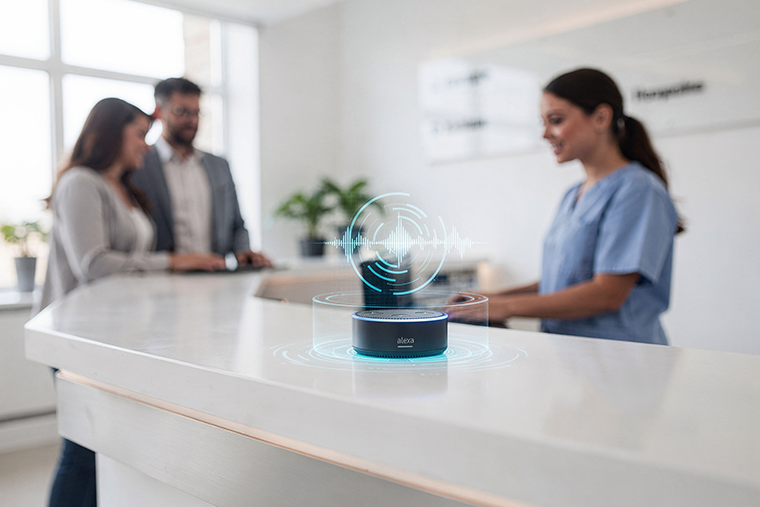
Hospitals and healthcare facilities are under constant pressure to improve patient access, reduce administrative burden, and maintain high satisfaction without increasing staff headcount. One of the most promising answers to this challenge is Voice AI automation for hospital reception — AI agents that answer calls, manage scheduling, handle patient questions, and streamline intake tasks with natural conversations, accurate responses, and 24/7 availability.
Below are the top five voice AI solutions that healthcare organizations are adopting to automate reception workflows, reduce missed calls, and enable staff to focus on high-value care.
1. Cabot Technology Solutions
Healthcare-first Voice AI for Reception & Patient Access
Cabot’s voice AI platform is specifically engineered for healthcare front desk automation, reducing repetitive call handling while increasing accuracy and patient satisfaction. Unlike off-the-shelf conversational bots, Cabot’s system embeds deep understanding of clinical workflows and integrates directly with electronic health records, scheduling systems, and patient management tools — ensuring seamless interactions that align with real hospital processes.
Why it stands out:
- Natural, human-like voice interactions for patients
- Handles a full range of reception tasks: appointment booking, FAQs, follow-ups
- Works 24/7 to reduce missed calls and hold times
- Designed with healthcare compliance and security in mind
- Reduces administrative burden so staff can focus on care delivery
Cabot’s approach balances automation with control, letting hospitals offload routine interactions while escalation paths bring complex cases to human staff when needed.
2. Voiceoc
Conversational AI for Patient Interactions and Front Desk Support
Voiceoc’s AI-driven platform focuses on automating key hospital front desk functions using conversational voice and natural language understanding. It is designed to assist with appointment scheduling, patient questions, reminders, and routine follow-ups — all while integrating with hospital systems to maintain data consistency.
Key benefits:
- Handles inbound patient calls with natural dialogue
- Helps reduce no-shows through automated reminders
- Supports two-way patient interactions around the clock
- Aims to improve efficiency while reducing front desk load
Voiceoc is particularly strong for organizations that want both automation and engagement, keeping patients informed and supported without overwhelming staff.
3. Vocca AI
Always-on Voice AI for Healthcare Communications
Vocca positions itself as a voice and text agent for patient engagement, helping health groups and practices manage calls, appointments, and reminders continuously. Its aim is to reduce administrative effort and improve patient experience by automating the calls that typically overwhelm reception teams.
Highlights:
- 24/7 voice and message handling
- Automated appointment booking and confirmations
- Reduces manual administrative tasks
- Scales with patient demand across specialties
Vocca is a flexible choice for hospitals and larger healthcare networks seeking a voice AI layer across phone, SMS, and messaging channels.
4. Retell AI
Scalable Voice AI Platform for Call Automation
Retell AI offers robust voice AI capabilities that can be adapted to healthcare reception automation. Its platform is designed to handle high volumes of natural-sounding phone calls with low latency and real-time responses, making it suitable for organizations that want enterprise-grade call handling and customizable voice interactions.
Notable features:
- Human-like conversations at scale
- Supports automated scheduling and inbound call handling
- Analytics and monitoring tools for performance and optimization
- Security features suitable for enterprise environments
Retell AI is particularly well-matched to hospitals that require scalable, reliable automation across all phone interactions.
5. Assort Health
Patient-Focused Voice AI with Deep Integration
Assort Health provides a voice AI solution that combines deep EHR/PMS integrations, multi-language support, and workflow automation for patient interactions. Its voice AI can manage appointments, route calls intelligently, handle FAQs, and even assist with follow-ups like prescription requests or billing questions — all designed to support clinical operations without adding complexity.
Strengths include:
- Multi-language support for diverse patient populations
- Personalized patient interactions with memory and context
- Helps reduce operational costs and improve access
- Tailored to different specialties and practice sizes
Assort Health is a strong contender for hospitals focused on holistic patient communication automation, from frontline calls to administrative triage.
Why Hospitals Are Turning to Voice AI Now
Healthcare front desks are experiencing a surge in patient inquiries — from appointment requests to insurance questions — often overwhelming staff and leading to missed calls and long wait times. Modern voice AI agents step in with natural language understanding, real-time scheduling, and consistent responses, helping hospitals provide better access without scaling headcount.
Today’s voice AI systems also offer:
- 24/7 availability for patient convenience
- Reduced administrative burden for reception teams
- Better appointment adherence and fewer no-shows
- Seamless workflows that integrate with existing hospital systems
- Support for multilingual patient populations and diverse patient needs
Conclusion
Automation is no longer just about cost savings — it’s about patient access, operational efficiency, and staff well-being. AI voice agents are redefining hospital reception workflows, making it possible to answer every call, schedule appointments, provide information, and reduce administrative load without increasing staffing.
Among the top solutions in this space, Cabot Technology Solutions stands out for its healthcare-centric design and deep integration with clinical workflows, followed by powerful alternatives like Voiceoc, Vocca, Retell AI, and Assort Health — each bringing unique strengths to the table.
As hospitals continue to evolve in an increasingly digital care environment, adopting voice AI for reception automation will be a key step toward improving patient experience and reducing front desk pressure.