


As the healthcare industry continues to evolve, there is a growing shift towards digital solutions that enhance operational efficiency, improve patient care, and reduce administrative burdens. One critical area of transformation is referral management, which plays a pivotal role in ensuring seamless coordination between healthcare providers. The move from traditional paper-based and phone-based systems to digital referral management systems has proven to be a game-changer in streamlining operations and improving patient outcomes.
In this blog, we compare the traditional methods of referral management with modern digital solutions to highlight why healthcare institutions are increasingly adopting digital systems. By examining the differences across various aspects of referral management, we can better understand the advantages of going digital.
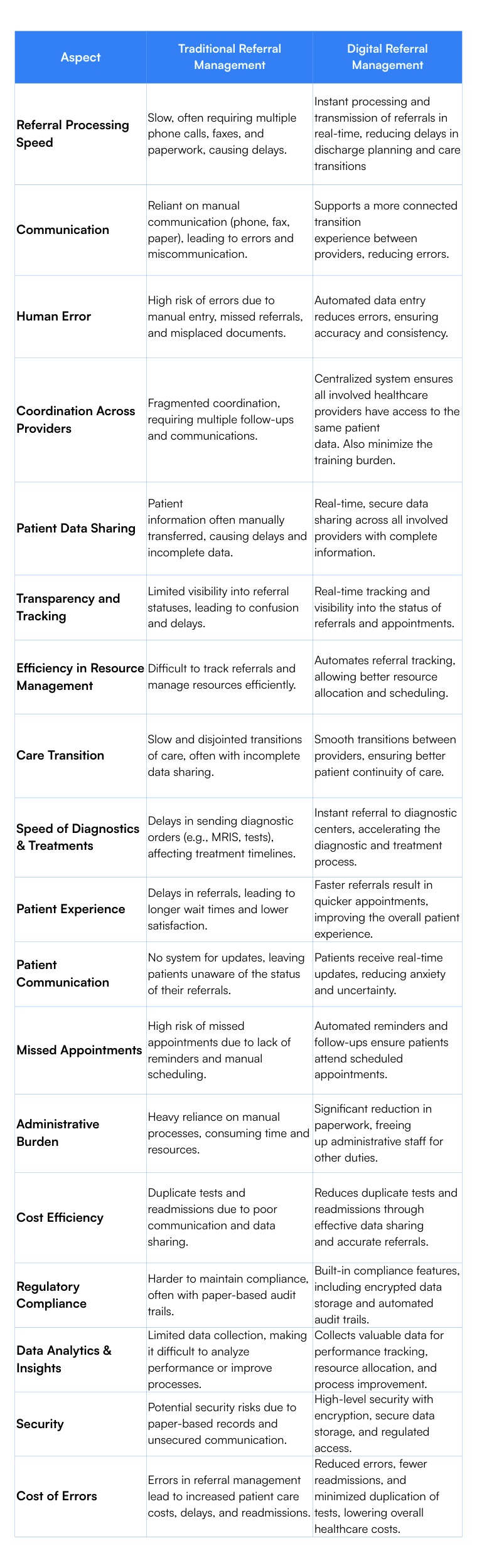
Comparison: Traditional vs. Digital Referral Management
Why Digital Referral Management is Essential for Modern Healthcare
As highlighted in the comparison table, the traditional methods of referral management—based on paper forms, faxes, and phone calls—are outdated and inefficient. These systems lead to delays, errors, and poor coordination, which ultimately impact patient outcomes and increase healthcare costs. In contrast, digital referral management systems offer streamlined, real-time communication, enhanced collaboration between providers, and improved patient experiences.
Key Benefits of Digital Referral Management
- Improved Efficiency: Digital systems automate many of the manual tasks involved in referrals, reducing delays and human errors, and allowing healthcare providers to focus more on patient care.
- Enhanced Care Coordination: With all providers having access to a centralized, up-to-date patient record, healthcare teams can collaborate seamlessly, ensuring that patients receive the best possible care at each stage of their treatment.
- Better Patient Experience: Patients benefit from quicker access to care, fewer missed appointments, and greater transparency throughout their healthcare journey.
- Cost Savings: By eliminating duplicate tests, preventing readmissions, and reducing administrative overhead, digital referral systems help healthcare providers cut costs and optimize resource allocation.
Conclusion

The shift from traditional to digital referral management is transforming healthcare delivery. With the ability to streamline processes, improve communication, reduce errors, and enhance patient care, digital referral systems are becoming an essential tool for hospitals, clinics, and diagnostic centers. The benefits—ranging from faster processing times to better patient outcomes—demonstrate that embracing digital technology in referral management is not just an improvement, but a necessity in modern healthcare.
As the healthcare landscape continues to evolve, adopting digital referral management will be key to improving efficiency, reducing costs, and providing superior patient care. Contact Cabot Solutions today to learn more about implementing a digital referral management system in your organization.