
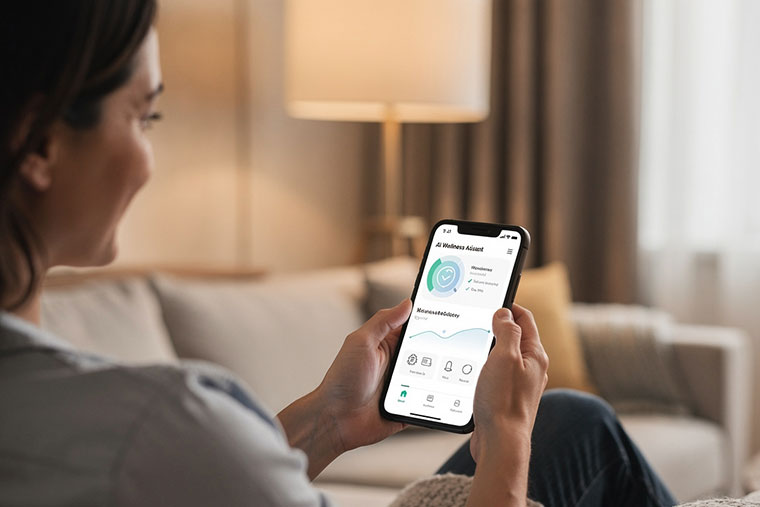
Custom AI Agent Development for Healthcare in Minneapolis

Partner with Cabot to design, build, and scale HIPAA-ready AI agents that accelerate clinical, operational, and patient-engagement outcomes.

Driving Intelligent Healthcare Workflows in Minneapolis

Cabot delivers custom AI agent development for healthcare in Minneapolis by blending deep clinical domain knowledge with proven engineering discipline, allowing health systems and digital-health vendors to automate decision-support, documentation, and outreach at scale while staying fully compliant with HIPAA and regional governance. Our Minneapolis-based architects collaborate closely with clinical SMEs to map patient-journey friction points, select the right foundation models, and fine-tune them with curated datasets so your teams receive accurate, explainable, and bias-monitored recommendations within their existing EHR, CRM, or analytics stack. By integrating secure FHIR APIs, advanced prompt-chaining techniques, and contextual embeddings, we ensure the agent you launch today continuously learns from real-world feedback, reduces cognitive load for clinicians, and improves key quality metrics such as readmission rates and time-to-diagnosis.

Stakeholders benefit from transparent governance dashboards that summarize model performance, PHI handling, and ethics scorecards, facilitating confident executive oversight and streamlined FDA or ONC audit preparation. Our delivery framework—rooted in ISO 13485-aligned quality management, shortens experimentation cycles without sacrificing patient safety, paving the way for features like voice-enabled charting, AI-driven utilization forecasting, and multi-modal triage bots that bring care closer to the home. Whether you need a proof-of-concept agent piloted in a single clinic or an enterprise deployment across a multi-state network, Cabot’s cross-functional teams stand ready to translate innovation mandates into measurable clinical, financial, and experiential gains.

Our Technology Stack

Languages
Python, TypeScript, Go, R

Frameworks
TensorFlow, PyTorch, LangChain, FastAPI

Cloud Platforms
AWS, Azure, Google Cloud, OCI

EHR Connectors
FHIR, HL7, SMART-on-FHIR, CDS Hooks

Databases
PostgreSQL, MongoDB, Snowflake, BigQuery

MLOps
Kubernetes, Kubeflow, MLflow, Argo CD

Security
OAuth 2.0, OpenID Connect, Keycloak, HashiCorp Vault

DevOps
Docker, Terraform, Jenkins, GitHub Actions

Analytics
Apache Spark, dbt, Power BI, Looker

Compliance Tooling
Vanta, Drata, Evident, OpenSCAP

Monitoring
Prometheus, Grafana, Datadog, Sentry

Testing
PyTest, Postman, Cypress, SonarQube

Schedule a 30-minute strategy session

Why Partner with Cabot for AI Agent Innovation

Cabot stands at the intersection of healthcare expertise and advanced machine-learning engineering, making us the trusted choice for custom AI agent development for healthcare in Minneapolis. Our multidisciplinary team—spanning data scientists, clinical informaticists, UX researchers, and DevSecOps engineers—has delivered over 150 health-tech projects globally, each governed by a mature ISO-certified quality system. We translate strategic objectives into secure, interoperable, and user-centric solutions that alleviate clinician burnout and unlock operational efficiencies.

Our proprietary Responsible-AI Framework embeds fairness assessments, model interpretability layers, and continuous compliance monitoring from day one, ensuring your AI agent meets HIPAA, HITECH, and Minnesota-specific privacy statutes. Coupled with battle-tested accelerators for FHIR, HL7, and DICOM data, we shorten time-to-value without locking you into proprietary platforms. Clients choose Cabot for our transparent communication model, outcome-oriented roadmaps, and unwavering commitment to patient safety—attributes that convert innovation budgets into tangible, board-visible results.

Our Proven AI Agent Delivery Framework

  1. Discovery & Alignment – Stakeholder workshops define clinical objectives, KPIs, and success criteria.
  2. Data Audit & Preparation – Assess data quality, map to FHIR resources, and implement de-identification pipelines.
  3. Model Selection & Fine-Tuning – Evaluate foundation models, apply transfer learning, and run iterative validation.
  4. Architecture & Integration – Design microservices, security layers, and EHR connectors; build scalable cloud infrastructure.
  5. Pilot Deployment – Launch in controlled settings, capture feedback, and measure impact against baseline metrics.
  6. Enterprise Rollout – Harden for scale, automate MLOps, and enable multi-tenant governance controls.
  7. Continuous Improvement – Monitor performance, retrain models, and release feature enhancements on a predictable cadence.

Our Industry Experience

volunteer_activism

Healthcare

shopping_cart

Ecommerce

attach_money

Fintech

houseboat

Travel and Tourism

fingerprint

Security

directions_car

Automobile

bar_chart

Stocks and Insurance

flatware

Restaurant

Download our Healthcare AI Agent Readiness Checklist

FAQ

Below are answers to the most common questions we receive about custom AI agent development for healthcare in Minneapolis.

  1. What distinguishes an AI agent from a traditional chatbot?
    • An AI agent performs autonomous actions—such as writing documentation or triggering alerts—based on contextual understanding, whereas a chatbot primarily handles conversational Q&A.
  2. How does Cabot safeguard Protected Health Information (PHI)?
    • We employ end-to-end encryption, role-based access controls, and automated PHI redaction layers. All pipelines are routinely penetration-tested and audited for HIPAA compliance.
  3. Can the AI agent integrate with our existing Epic instance?
    • Yes. Our pre-built Epic SMART-on-FHIR modules allow seamless read/write capabilities without compromising system performance or vendor support agreements.
  4. What is the typical timeline for moving from ideation to pilot?
    • Depending on data readiness, most organizations achieve a functional pilot within 12–16 weeks, including discovery, development, and limited clinical validation.
  5. How do we measure ROI for an AI agent?
    • Key indicators include reduction in clinician documentation time, improvement in triage accuracy, increase in patient engagement touchpoints, and downstream cost avoidance from early interventions.