
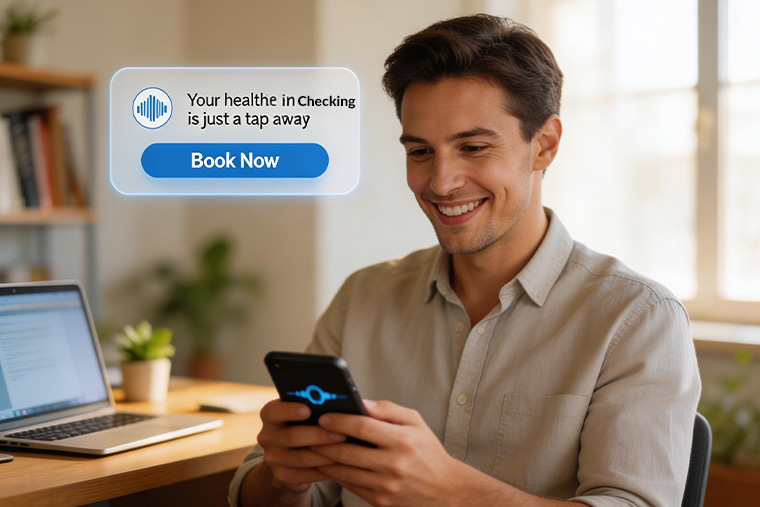
Voice AI for Healthcare Facilities Massachusetts

Deploy secure, clinician-friendly Voice AI to enhance patient experience, cut documentation time, and streamline operations across Massachusetts.

Voice AI for Healthcare Facilities in Massachusetts

Massachusetts is home to some of the nation’s most innovative hospitals, community health systems, and academic medical centers. Yet every day these organizations wrestle with familiar challenges: rising patient volumes, clinician burnout, tightening margins, and ever-increasing regulatory scrutiny. Voice AI for Healthcare Facilities Massachusetts offers a practical path forward. By converting natural speech into structured, actionable data, Voice AI removes administrative friction, accelerates clinical workflows, and creates a calmer, more patient-centric environment.

Picture a physician dictating notes during an outpatient visit while the EMR populates itself—no more evening hours spent typing. Imagine a nurse who answers call-light requests hands-free, instantly triages needs, and dispatches the right resource without leaving the current patient’s bedside. Consider hospital operators whose phone lines are augmented by conversational AI that routes callers accurately within seconds. These are not future aspirations; they are live deployments we have already delivered for providers across the Commonwealth.

Our multidisciplinary team blends deep clinical insight with cutting-edge data science, speech recognition, and cloud-native engineering. From rapid prototyping to enterprise-grade rollouts, we tailor every solution to the specific workflows, compliance obligations, and cultural nuances of your facility. The result is measurable improvement in patient satisfaction, reduced documentation burden, and quantifiable operational savings—all while maintaining the highest standards of HIPAA and Mass. data-privacy compliance.

Our Technology Stack

Speech Recognition Engines
Google Cloud Speech-to-Text, Amazon Transcribe Medical, Microsoft Azure Cognitive Services, Nuance Dragon Medical One

NLP Frameworks
TensorFlow, PyTorch, spaCy, Hugging Face Transformers

Conversational Platforms
Dialogflow, Rasa, Amazon Lex, Microsoft Bot Framework

Healthcare Integrations
HL7, FHIR, Epic APIs, Cerner Ignite

Deployment & Orchestration
Kubernetes, Docker, Istio, Helm

Databases & Storage
PostgreSQL, MongoDB, Cloud SQL, Amazon S3

Security & Compliance
SOC 2, HITRUST, HIPAA Encryption, OAuth 2.0

Voice Infrastructure
Twilio, Vonage, WebRTC, SIP

Monitoring & Analytics
Prometheus, Grafana, ELK Stack, Datadog

Model Serving
TensorFlow Serving, TorchServe, KFServing, Vertex AI

CI/CD Pipelines
GitHub Actions, Jenkins, Argo CD, CircleCI

Front-End Frameworks
React, Angular, Vue.js, Svelte

Discuss Your Voice AI Initiative

Why Partner with Cabot

For more than a decade, Cabot has delivered mission-critical healthcare technology across the continuum of care—from world-renowned academic medical centers in Boston to community hospitals in the Berkshires. Our seasoned teams of clinicians, conversational designers, and cloud architects collaborate to craft Voice AI solutions that feel intuitive on day one yet remain robust enough to scale system-wide.

We start with workflow discovery, embedding ourselves alongside physicians, nurses, and administrators to uncover pain points that truly matter. Armed with this intelligence, we design conversational experiences that mirror clinical reality, not theoretical use cases. Our engineers then build secure, HIPAA-compliant micro-services that integrate seamlessly with Epic, Cerner, Meditech, and other EHR ecosystems. Rigorous validation with frontline users guarantees adoption, while our compliance specialists ensure alignment with HIPAA, HITECH, and Massachusetts data-privacy statutes.

Cabot’s commitment does not end at go-live. We provide 24/7 monitoring, user-centric analytics, and proactive optimization to ensure your Voice AI investment keeps pace with evolving clinical needs. Whether you aim to reduce transcription costs, mitigate clinician burnout, or elevate patient engagement, Cabot brings the proven frameworks, local presence, and global engineering scale to make it happen—on time and on budget.

Our Process

  1. Discover: We map current clinical and administrative workflows, interview stakeholders, and define measurable success metrics.
  2. Design: Our UX specialists craft conversational flows, security models, and integration blueprints tailored to your environment.
  3. Develop: Agile sprints with physician-in-the-loop validation ensure each increment aligns with user expectations and regulatory standards.
  4. Deploy: We orchestrate phased rollouts, provide hands-on training, and execute rigorous testing in parallel production environments.
  5. Optimize: Post-launch, we monitor usage, surface insights, and iterate continuously to expand capabilities and ROI.

Our Industry Experience

volunteer_activism

Healthcare

shopping_cart

Ecommerce

attach_money

Fintech

houseboat

Travel and Tourism

fingerprint

Security

directions_car

Automobile

bar_chart

Stocks and Insurance

flatware

Restaurant

Schedule a 30-Minute Strategy Call

FAQ

Below are answers to the most common questions we receive from healthcare leaders exploring Voice AI for Healthcare Facilities Massachusetts.

  1. Is Voice AI truly HIPAA-compliant?
    • Absolutely. We apply end-to-end encryption, role-based access controls, audit logging, and adhere to HIPAA, HITECH, and Mass. privacy statutes.
  2. Will clinicians need new hardware?
    • No. Our solutions work with existing smartphones, workstations, or clinic microphones. Optional smart speakers can be added for specific use cases.
  3. How long does implementation take?
    • A minimum viable product can launch in 8–12 weeks. Full enterprise rollouts depend on integration scope and change-management requirements.
  4. Does Voice AI replace human staff?
    • Voice AI augments, not replaces. It automates repetitive tasks so clinicians and staff can focus on high-value, patient-centric work.
  5. What about accuracy in noisy clinical environments?
    • We employ medical-grade speech models, noise-cancellation algorithms, and continuous tuning to maintain industry-leading accuracy in real-world settings.