

Introduction
Chronic diseases are increasingly becoming a major burden on global healthcare systems. In the U.S., nearly 60% of adults manage one or more chronic conditions, and a large portion of these individuals are responsible for managing their health at home. Despite this, 50% of patients fail to take their medications as prescribed, leading to an alarming 125,000 deaths annually due to medication non-adherence. The challenges are compounded by coordination gaps, patient isolation, and the strain placed on caregivers who are left to navigate the complexities of at-home care.
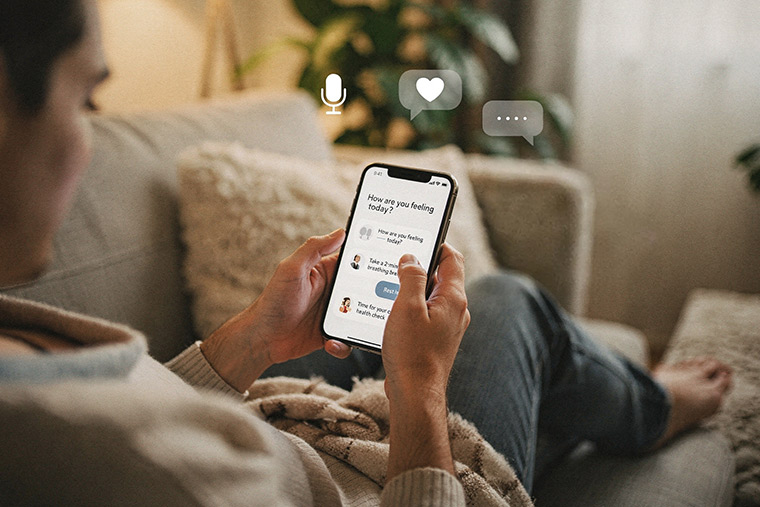
Traditional home healthcare often struggles to provide continuous support. Patients and caregivers face difficulties in staying on top of medication schedules, understanding symptoms, and following recovery plans. However, Voice AI offers a solution that addresses these challenges. Voice AI provides 24/7 conversational support, accessible via smartphones or smart speakers, delivering real-time reminders, monitoring, and education. This article explores how Voice AI is transforming home healthcare by making it more efficient, accessible, and cost-effective for both patients and healthcare leaders.
Rise of Voice AI in Home Healthcare
The rise of Voice AI in home healthcare is fueled by advancements in Natural Language Processing (NLP) and speech recognition technologies. NLP enables Voice AI to understand and process patient requests in real-time, making it easier for patients to interact with their healthcare tools naturally, via spoken language.
Historically, healthcare has been clinic-centric, with patients requiring frequent visits to access care. However, with the advent of telemedicine and the shift toward home-based models, healthcare is increasingly moving to the patient’s residence. This transition has been accelerated by the COVID-19 pandemic, which has highlighted the importance of remote care solutions.
Studies show that readmission rates can be reduced by up to 30% when patients are provided with continuous, at-home support. Voice AI empowers patients by ensuring they receive ongoing reminders, monitoring, and support, reducing the need for in-person visits and alleviating the strain on healthcare facilities.
What Can Voice AI Do Better?
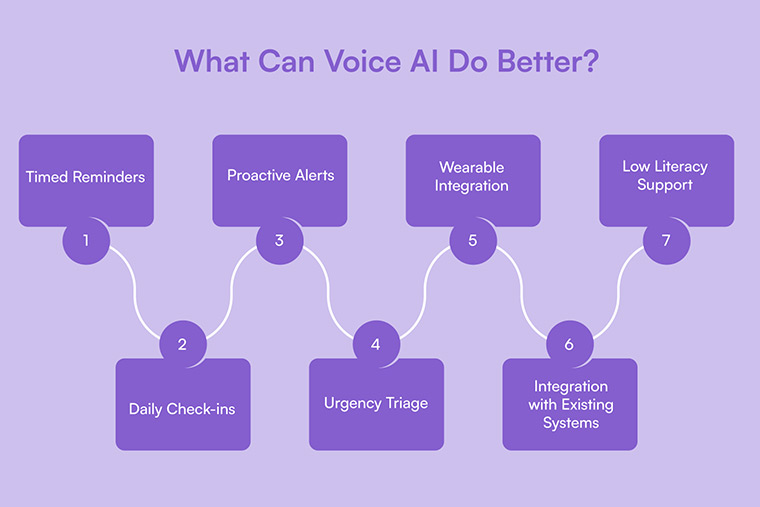
Voice AI offers a host of capabilities that directly enhance home healthcare, making it easier to manage chronic conditions, medications, and daily health tracking. Here’s what Voice AI does better:
- Timed Reminders: Automated, real-time medication reminders ensure patients never miss a dose, helping improve adherence and prevent complications.
- Daily Check-ins: Voice AI can initiate daily health assessments, tracking symptoms and vital signs such as blood pressure or glucose levels, and provide feedback based on responses.
- Proactive Alerts: Voice AI monitors patient responses in real time and sends proactive alerts if something is amiss, such as abnormal vitals or missed medication, prompting patients or caregivers to take necessary action.
- Urgency Triage: Voice AI helps assess the urgency of symptoms by allowing patients to describe their condition in their own words, and it can escalate cases to healthcare providers when necessary.
- Wearable Integration: Seamlessly integrates with wearable health devices to track real-time data, such as heart rate, oxygen levels, or activity, to provide holistic patient monitoring.
- Integration with Existing Systems: Voice AI easily integrates with Electronic Health Records (EHR), streamlining communication between patients, caregivers, and healthcare providers, and ensuring everyone is aligned with the latest health data.
- Low Literacy Support: With spoken guidance, Voice AI removes the barriers of written instructions, especially for patients with low literacy, making health information more accessible.
Sample Use Cases
Voice AI is transforming home healthcare with practical applications that address common challenges in chronic disease management. From medication adherence to emotional support, Voice AI offers real-time, personalized assistance, empowering patients to take charge of their health. These use cases illustrate how Voice AI can simplify medication tracking, monitor vital signs, assess symptoms, and provide emotional support, all while integrating with existing healthcare systems to enhance patient care and outcomes.
Medication Adherence Made Simple

One of the most significant challenges in home healthcare is ensuring that patients adhere to their prescribed medication regimens. According to research, 20-50% of patients fail to take their medications correctly, which contributes to adverse health outcomes, hospital readmissions, and increased healthcare costs.
Voice AI simplifies medication management by offering:
- Timed reminders to take medications at the correct time.
- Voice confirmations where patients can confirm that they’ve taken their medication, creating a self-check system.
- Side effect education that informs patients about potential side effects and when to seek medical help.
- Adherence logs that can be integrated with EHRs (Electronic Health Records) for real-time tracking and updates.
By automating medication management, Voice AI leads to higher medication adherence rates, which studies show can result in 20-50% improvements in patient compliance. This helps reduce the risk of medication errors, improves clinical outcomes, and minimizes costly readmissions.
Chronic Disease Monitoring
For patients with chronic diseases like diabetes, hypertension, or COPD, managing their condition at home is an ongoing task. Voice AI plays a pivotal role by acting as a continuous monitoring tool that tracks vitals, prompts lifestyle adjustments, and ensures regular check-ins with healthcare providers.
Key features of Voice AI in chronic disease monitoring include:
- Daily check-ins for tracking blood pressure, blood sugar, and other vital signs.
- Proactive alerts when vital signs deviate from recommended ranges (e.g., high blood sugar or elevated blood pressure).
- Glycemic control improvements by prompting patients to check blood sugar levels and reminding them to follow prescribed dietary plans.
With Voice AI, diabetic patients can receive reminders to check their glucose levels, log their results, and receive real-time feedback on how their lifestyle changes are affecting their condition. Hypertensive patients can receive daily blood pressure checks, helping them avoid cardiovascular events. These personalized, daily interactions help reduce complications and improve disease management.
Symptom Tracking and Triage
Early detection of complications or symptoms that require urgent care is crucial in post-surgery or chronic disease management. Voice AI provides symptom tracking that enables patients to describe how they are feeling, and the system evaluates the urgency of the symptoms.
Features of Voice AI for symptom tracking and triage:
- Natural symptom description: Patients can describe symptoms in their own words, such as “I’m feeling short of breath” or “I have a headache,” and receive immediate guidance on what actions to take.
- Urgency triage: Based on the patient’s responses, Voice AI can determine if the situation requires immediate medical attention, escalating the issue to a healthcare provider or directing the patient to emergency services.
- Wearable integration: Voice AI integrates with wearable devices to track real-time data such as heart rate, oxygen levels, and sleep patterns.
- Emotion-aware escalations: If a patient’s emotional tone suggests anxiety or stress, Voice AI can escalate the case to a clinician.
For instance, if a post-surgery patient reports pain or swelling at the surgical site, the AI can assess the severity of the symptom and advise the patient whether they should seek medical help immediately. This triage functionality can prevent complications, providing peace of mind to patients and ensuring they receive timely interventions.
Emotional and Preventive Support
Healthcare is not just about managing physical health—it also includes emotional support, especially for elderly patients, caregivers, and individuals managing chronic conditions. Voice AI offers a form of companionship for patients, making them feel supported, especially in isolation or when a caregiver is not present.
Key features for emotional support:
- Companionship for elderly patients by engaging in friendly conversations, alleviating feelings of loneliness.
- Preventive screenings for depression, anxiety, and other mental health concerns through structured dialogues.
- Multilingual support ensures that non-native speakers can interact with Voice AI in their preferred language, making healthcare more inclusive.
Voice AI has a significant role in combating isolation by providing patients with constant, empathetic interaction, which is essential for both mental and emotional well-being.
Integration with Clinical Workflows

As healthcare systems adopt remote care solutions, Voice AI must seamlessly integrate with existing clinical workflows to ensure smooth data transfer and alignment with patient care strategies. This integration is essential for ensuring that healthcare providers are fully aware of a patient’s condition at all times.
Key integration features:
- EHR syncing: Voice AI synchronizes patient data, including medication logs, symptom reports, and vitals, with the EHR system, providing clinicians with real-time updates.
- Nurse workload reduction: By handling routine patient inquiries and follow-ups, Voice AI can reduce nurse workload by 40-60%, allowing them to focus on more complex patient needs.
- Population health analytics: Data collected from Voice AI can be used for population health management, identifying trends and allowing healthcare leaders to make data-driven decisions.
This integration helps healthcare organizations stay aligned with their clinical goals, while reducing administrative burden and ensuring patients receive comprehensive, consistent care.
Accessibility for Diverse Populations
One of the significant advantages of Voice AI is its ability to serve diverse populations, including those with low literacy, the elderly, or non-native speakers. In traditional healthcare settings, these populations may struggle to fully understand written instructions or navigate complex health apps.
How Voice AI improves accessibility:
- Low-literacy support: Voice AI eliminates the need for patients to read complicated discharge instructions by providing spoken guidance.
- Elderly care: Voice AI offers intuitive interactions that are easy to use, especially for elderly patients who may find digital interfaces challenging.
- Non-native speakers: By offering multilingual support, Voice AI makes healthcare more equitable and ensures that language barriers do not hinder recovery.
Evidence and ROI Metrics
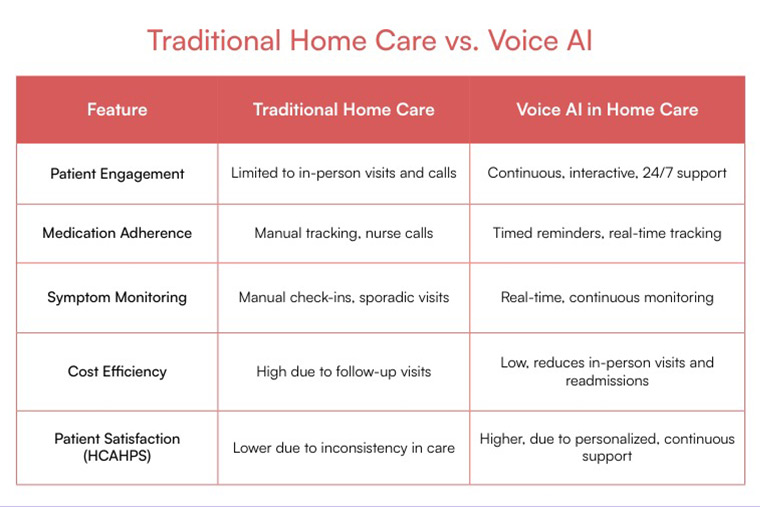
Studies have shown that Voice AI can boost medication adherence by 20-50%, significantly improving patient outcomes. The financial impact is also significant, with hospitals saving as much as $1,500 per patient per year by reducing readmissions and improving adherence. The improvement in HCAHPS (Hospital Consumer Assessment of Healthcare Providers and Systems) scores also translates into higher patient satisfaction and reimbursement rates.
Traditional Home Care vs. Voice AI
Spotlight on Cabot's AI Agent Solution
Cabot Solutions' AI Voice Agent Solution is specifically designed to assist in home-based care, offering a HIPAA-compliant, scalable, and secure platform for improving patient outcomes. Cabot's solution provides reminders, symptom monitoring, and direct integration with EHR systems, making it easy for healthcare providers to scale their services without expanding staff. This AI-driven solution is designed to help organizations provide continuous care to chronic patients, manage medication adherence, and improve overall patient satisfaction—all while keeping operational costs in check.
Implementation Strategies
For healthcare leaders, the key to implementing Voice AI successfully starts with identifying high-risk patient populations (e.g., those recovering from COPD, heart surgery, or diabetes) and rolling out pilot programs. Success requires aligning AI workflows with clinical protocols and ensuring staff training to monitor patient engagement and address false positives.
Future Outlook: A New Era of Healthcare with AI
As technology advances, Voice AI will continue to evolve. In the near future, we can expect multimodal AI solutions combining wearables, predictive analytics, and AI-driven triage. These technologies will enable even more personalized, proactive care, allowing healthcare providers to address potential issues before they become critical.
Conclusion
Voice AI is no longer a futuristic concept—it’s transforming how we manage healthcare at home today. By enabling continuous care, medication adherence, and symptom tracking, Voice AI is making home health management more efficient and effective than ever before. Cabot’s AI Voice Agent Solution is at the forefront of this innovation, offering healthcare leaders a scalable, cost-effective solution to improve patient outcomes while reducing the burden on healthcare systems.
Healthcare leaders, now is the time to embrace Voice AI and offer your patients the continuous support they need for better health outcomes and improved operational efficiency.