Feed-by-Feed HL7 to FHIR Migration Services

Move your HL7 v2 feeds to FHIR without switching a single interface off.

Most US health systems, payers and labs still run their daily exchange on HL7 v2: admissions, orders, results, vaccinations and scheduling, flowing through an integration engine that has been tuned for a decade. That works until a payer API deadline, an EHR vendor retiring an older FHIR version or an engine licensing change forces the question of how those feeds become FHIR.

The risk is not FHIR itself. It is the interfaces nobody documented, the local codes and Z segments that break a clean mapping, and the cost of a wrong mapping reaching a patient record. Cabot inventories every interface, maps each one to FHIR resources and runs the old feed and the new output side by side until they match.

Most engagements open with an assessment that produces an interface inventory, a mapping plan, an engine recommendation and a cutover order. You decide whether to proceed before any build work is funded, which is the cheapest decision point in the whole program.

Scope your project

Tell us what you run and when it has to move. An engineer replies within one business day, with no obligation.

Thank you! Your submission has been received!
Oops! Something went wrong while submitting the form.

No obligation. Your details stay private.

What HL7 to FHIR migration actually covers

HL7 to FHIR migration moves the data exchange an organization runs on HL7 v2 interfaces to HL7 FHIR, usually FHIR R4, by mapping each message to FHIR resources and cutting over one interface at a time while the existing feeds keep running.

Four situations sit under the same phrase, and they need different plans. The first is HL7 to FHIR conversion: turning live v2 feeds into FHIR resources through a transformation layer, so downstream systems can consume FHIR without the source system changing. The second is moving an EHR integration from an older FHIR version, such as DSTU2, to R4. The third is changing or replacing the integration engine that carries the feeds. The fourth is standing up a FHIR API so payers, partners and apps can query data on demand.

HL7 publishes a v2 to FHIR implementation guide that maps v2.9 segments, data types and vocabularies to FHIR R4. It is a starting point, not a finished mapping for your interfaces, because real feeds carry local codes, custom Z segments and site specific habits the guide cannot know. That gap is where most of the work, and most of the risk, sits.

A migration is not a replacement of your EHR, and it does not require retiring HL7 v2. Most organizations run both for years, because older devices, labs and departmental systems keep sending v2 long after the first FHIR interface goes live. The goal is a controlled path, not a date by which everything is switched off.

Why moving interfaces to FHIR stalls in predictable ways

These are the six reasons integration leaders give when an earlier attempt lost momentum. Most are not coding problems, and most stay hidden until the budget is committed.

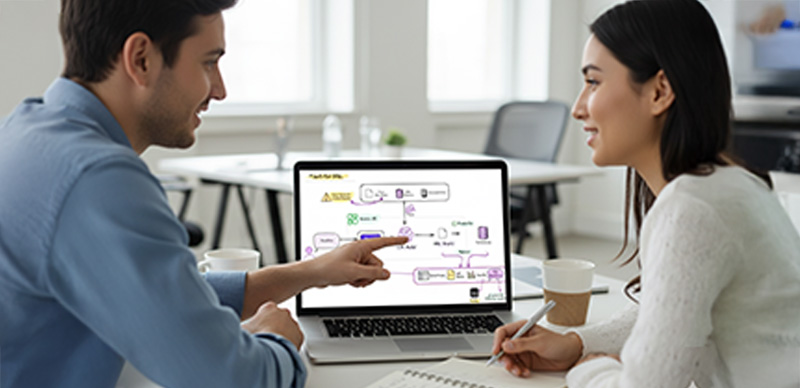
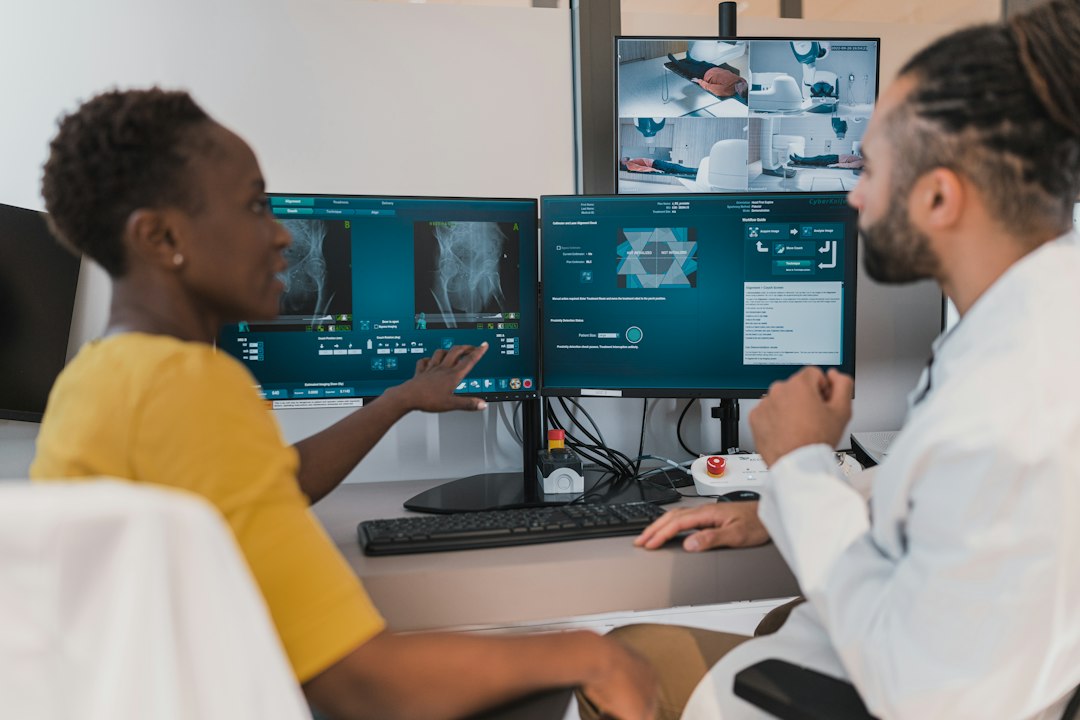
Two colleagues reviewing healthcare data together on a computer screen

The HL7 to FHIR migration services we deliver

Six services, scoped to where you are. Some organizations need the whole path from inventory to cutover. Others already have the inventory and need the mapping and the parallel run, or have a FHIR target in place and need the feeds moved into it. We give you our recommendation and our reasoning before you commit to anything.

Each service produces something you can inspect: an inventory, a mapping specification, a working transformation, a comparison report, a validated FHIR API. Testing and security run inside every service instead of sitting as separate lines.

What do HL7 to FHIR migration services cost, and what moves the number?

Five things set the cost: the number of interfaces and message types in scope, how many local codes and custom segments need mapping, how much terminology work the target requires, which engine and FHIR platform you land on, and how much parallel run time your risk tolerance needs. A twenty interface hospital and a payer with hundreds of feeds are not comparable work, so any figure quoted before an inventory is a guess. Model a range in a few minutes, then tell us what you run and we will scope it properly. We would rather give you a narrow range you can plan around than a wide one that protects us.

How we inventory and score your interfaces before anything is converted

Most overruns are decided in the first few weeks, before any mapping is built. The assessment looks at four things in a fixed order, because the order stops the visible problem from hiding the expensive one.

See what an inventory finds: send us your engine and message types and we will tell you what the first inventory would cover.

What does AI actually change about moving HL7 feeds to FHIR?

It changes the economics of the slow parts and leaves the judgment where it was. Reading a channel nobody has opened in years, drafting a first mapping specification, generating test messages and spotting where a local code has no standard equivalent are all work a model can draft quickly. Deciding what a field means clinically, which codes to trust and whether a cutover goes ahead is not.

In practice the saving concentrates in three places. Discovery goes faster, because a model can summarize what a channel transforms and where its data goes. Mapping goes faster, because the first draft of a segment to resource map no longer starts from a blank page. Test building goes faster, because synthetic messages covering the awkward cases are easy to generate.

The risk runs the other way. A mapping that looks plausible and is subtly wrong is worse than one that is visibly missing, so every AI draft is checked against real messages and compared in the parallel run before it counts.

So our process is built around review. AI development shortens the slow parts of a migration. It does not choose a code mapping, approve a merge or sign off a cutover. Those stay with senior engineers and with you.

Three commitments hold on every engagement. Our process is model neutral, so we use the model your policy allows. A senior engineer reviews every change before it merges. And we never train any model on your code or data. Test data is synthetic or masked, so protected health information stays out of model prompts.

What we migrate HL7 v2 feeds to, and what we build it with

Three layers of tooling, chosen against your constraints and your team's ability to run the result rather than against our preferences. Our healthcare application development team builds the applications that consume the new data. The engine question gets a plain answer here too. Teams on open source Mirth Connect 4.5.2 or earlier can stay on that version, license an upgrade or move to another engine, and each path has costs that show up in the inventory. We are engine neutral and recommend on that evidence.

What we work in:

Integration engines

Mirth Connect
Rhapsody
Cloverleaf
Iguana
InterSystems IRIS for Health
Apache Camel

FHIR platforms

HAPI FHIR
Azure Health Data Services
AWS HealthLake
Google Cloud Healthcare API
Firely Server
Oracle Health R4 APIs

Validation and delivery

FHIR Validator
Inferno
US Core
Synthea
GitHub Actions
GitHub Copilot

Where AI sits at each stage of the work, and where it does not

Each stage below has an output you can inspect and a person who approves it. Nothing an AI drafts reaches your engine, your FHIR server or your clinical data without a named engineer accepting it first.

Migration stage What AI does What stays human Tools used
Discovery Summarizes channels and transformers and maps where each feed's data goes Deciding what is in scope and which interfaces move first GitHub Copilot
Mapping Drafts segment to resource maps and flags fields with no standard equivalent Approving every code mapping and its clinical meaning GitHub Copilot, HAPI FHIR
Test building Generates synthetic messages covering edge cases and drafts the expected FHIR output Reviewing what the tests must protect Synthea, GitHub Copilot
Validation Flags differences between v2 and FHIR output and summarizes validator results Accepting or rejecting each difference and releasing each feed FHIR Validator, Inferno, GitHub Actions

The last column names the tools, so a security reviewer can see exactly what touched the mappings. Where your policy limits which tools can be used, the same stages run with the tools you allow and the same human review.

How a Cabot migration differs from a typical HL7 to FHIR vendor's

Migrations succeed or fail on how they are scoped, validated, cut over and reviewed. Those are the places projects go wrong, so each row below is a moment where the approach changes the outcome.

Dimension Typical vendor Cabot
Cutover method One switch date for every interface One feed at a time, in an agreed order, lowest clinical risk first
Rollback A plan on paper The old feed stays live until the new output is proven, with rollback ready for each interface
Validation Spot checks on sample messages Message by message comparison of v2 and FHIR output in a parallel run
Terminology Left to the client after delivery Local codes mapped to LOINC, SNOMED CT, ICD-10 and RxNorm as part of the work
Engine stance Recommends the vendor's own platform Engine neutral, with a written recommendation from your inventory
AI use Undisclosed or unreviewed Named tools, human review before merge, no training on your data
Knowledge transfer A handover document Your engineers pair with ours throughout, so the mappings stay understood

Ask any vendor the AI use question first. The answer should name the tools, the reviewer and what happens to your data. Ours is written into each statement of work.

The environments we migrate

We deliver this work across three kinds of organization. Each card says what we understand about it, rather than claiming coverage of it.

Across all three the pattern is the same: the interfaces are old enough that few people hold the whole picture, and important enough that a bad cutover is not an option. That is the work we are built for. Our healthcare integration services practice carries the same discipline into the EHR connections we maintain, including MEDITECH integration services and eClinicalWorks integration solutions.

Industries we already understand

volunteer_activism

Healthcare

shopping_cart

Ecommerce

paid

Fintech

apartment

Travel and Tourism

Client Success Stories

See all Cabot case studies

What a migrated interface has to demonstrate before it goes live

Security leads every migration, and most of it is access control and data handling. We encrypt data in transit and at rest, apply role based access to engines and FHIR servers, keep an audit trail of who changed which mapping, hold secrets outside the code and keep protected health information out of test data and model prompts.

For FHIR output we validate resources against US Core and run the checks your certification and payer programs expect. Our development practice maps to the NIST Secure Software Development Framework, so an enterprise or federal buyer can see what they are attesting to.

Where the interfaces handle patient data, we scope the work to the safeguards your compliance team requires, backed by our HIPAA compliance consulting practice, and document each control the migration touches.

For each feed you receive evidence, not assurance: the mapping specification, the comparison report, the validator results, the list of changes with the engineer who approved each one, and the rollback plan. Your security team can check each item without asking us.

Encryption in transit and at rest
Role based access control
SSO and MFA
Audit logging
Secrets management
Synthetic and masked test data
US Core validation
USCDI aligned data
HIPAA aligned controls

How an HL7 v2 feed moves to FHIR, step by step

Six steps, each ending in a decision you make rather than a document you receive. Most engagements begin with the first two steps alone, so you can judge the plan and the working relationship before committing to the build.

Start with step 01: tell us which engine and message types you run and we will scope the first inventory.

Who migrates it, and what each person owns

Accountability is explicit from the first day. An integration architect owns the mapping approach and the cutover order, and answers for choices that are expensive to reverse. Senior integration engineers own the transformation layer. A FHIR specialist owns resource design and validation. A QA automation engineer owns the comparison and test safety net. A DevOps engineer owns pipelines, monitoring and rollback. A delivery lead owns the schedule and tells you plainly when something slips.

Our depth is greatest in four places: mapping admissions, orders and results messages to FHIR R4 resources, handling local codes and Z segments without losing meaning, building parallel run comparisons that prove two feeds match, and moving EHR integrations from older FHIR versions to R4.

A typical week has a fixed shape: planning at the start, a demonstration of working interfaces midweek, and a written status at the end covering what moved, what is blocked and what decision we need from you.

Your engineers join our standups and reviews from week one, so the knowledge stays with you. Where a larger group fits, we staff an embedded engineering pod inside your delivery cadence.

Why healthcare IT leaders choose Cabot for feed-by-feed HL7 to FHIR migration

A migration is easy to start and hard to hand over. These are the six reasons buyers give when they explain why the work sits with us.

Where to go next, depending on what is in your way

The feed migration is one part of the picture. What you need alongside it depends on which of these describes your situation, and it is usually one of three.

Our Clients

Questions integration and technology leaders ask before starting

  1. Do we have to retire HL7 v2 to adopt FHIR?
    No. Most organizations run HL7 v2 and FHIR side by side for years, because labs, devices and departmental systems keep sending v2 long after the first FHIR interface goes live. A feed by feed migration moves interfaces to FHIR where a consumer needs it and leaves the rest on v2 until there is a reason to move them. The goal is a controlled path, not a date by which everything is switched off.
  2. How long does an HL7 v2 to FHIR migration take?
    It depends on the number of interfaces, how many local codes and custom segments need mapping, the target platform and how long you want to run in parallel. A single well understood feed can move in weeks. A program covering dozens of interfaces runs in stages over months, because each feed needs its own comparison period before cutover. We give you a range after the inventory, so you see a timeline before you commit.
  3. How much does an HL7 to FHIR migration cost?
    Cost follows the same drivers as the timeline: interface count, mapping complexity, terminology work, the engine and FHIR platform you land on, and the length of the parallel run. We give a range after the inventory, so you see numbers before you commit. For a first view, use the cost calculator.
  4. Can we migrate without interrupting live interfaces?
    Yes. The existing v2 feed keeps serving production while the FHIR output is built and compared beside it. Nothing is switched until the two match, each interface moves on its own, and a rollback stays ready for every one. Where a short maintenance window cannot be avoided, we plan it with you for your lowest volume period.
  5. Which HL7 v2 messages convert cleanly to FHIR, and which do not?
    Common message types such as ADT admissions, ORU results, ORM orders, VXU vaccinations and SIU scheduling have established mappings. The ones that need the most work carry custom Z segments, local code sets, unstructured text results or sequencing behavior that FHIR resources do not hold on their own. The inventory sorts your feeds into those that convert as is, those that need rework and those that need a decision from you.
  6. Do we need to replace our integration engine?
    Not necessarily. You can keep your current engine and add a transformation layer, license an upgrade, or move to another engine or a cloud service. The right answer depends on your volumes, your team, your other interfaces and what your engine vendor's license and support terms now allow. We are engine neutral and recommend from your inventory.
  7. How do you prove the FHIR output matches the v2 source?
    We run the v2 feed and the FHIR output in parallel and compare them message by message, checking that each field that should carry across does, that codes map as agreed and that resources validate against US Core. Every difference is reported and decided before a feed cuts over. You see the match rate for each interface and release each one on evidence.
  8. Does moving to FHIR satisfy CMS and ONC API rules?
    It supports them, but it does not satisfy them on its own. CMS requires impacted payers to expose FHIR APIs for provider access, payer to payer exchange and prior authorization by January 1, 2027, and ONC certification expects FHIR R4 APIs carrying USCDI data. Meeting a rule depends on which data you expose, how you authorize access and how you document it. Our assessment maps your feeds to the rule that applies to you, and your compliance team decides what counts as compliant.